

VRF vs. Chilled Water System: 2026 Commercial HVAC Comparison Guide

Choosing the wrong cooling architecture in 2026 could cost your Central Texas facility more in regulatory penalties and tariff-inflated parts than the actual installation itself. When you're weighing a VRF vs chilled water system, you're not just comparing hardware; you're navigating a complex web of new EPA refrigerant mandates and shifting energy prices. You likely already feel the pressure of rising operational costs and the need for a system that offers both elite performance and fiscal responsibility. It's a stressful balancing act to weigh a massive initial investment against the promise of long-term savings when national trade policies keep shifting the goalposts.
Our guide simplifies this decision by analyzing lifecycle costs and maintenance expectations in the current economic climate. We'll show you how building size and specific cooling loads interact with the latest ASHRAE 90.1-2025 standards to determine your best ROI. You'll also find insights into Austin Energy rebates and how to choose a high-efficiency solution that prioritizes long-term reliability over frequent, costly replacements. By the end of this comparison, you'll have a clear roadmap for protecting your facility's comfort and your bottom line for the next decade.
Key Takeaways
Learn how to navigate the 2026 economic landscape, including how trade tariffs on specialized components for LG and Daikin systems influence your total cost of ownership.
Compare the performance of a VRF vs chilled water system to see which architecture handles the unique part-load demands of Austin office buildings more efficiently.
Discover how to utilize Austin Energy rebates and preventative maintenance to bridge the gap between high initial capital costs and long-term operational savings.
Understand our restoration over replacement philosophy and how it applies to complex maintenance needs like managing refrigerant levels and oil return in advanced VRF systems.
Identify which facility types benefit most from heat recovery technology to repurpose waste heat for free hot water and improved energy efficiency.
Table of Contents
Defining the Technology: VRF vs. Chilled Water Systems
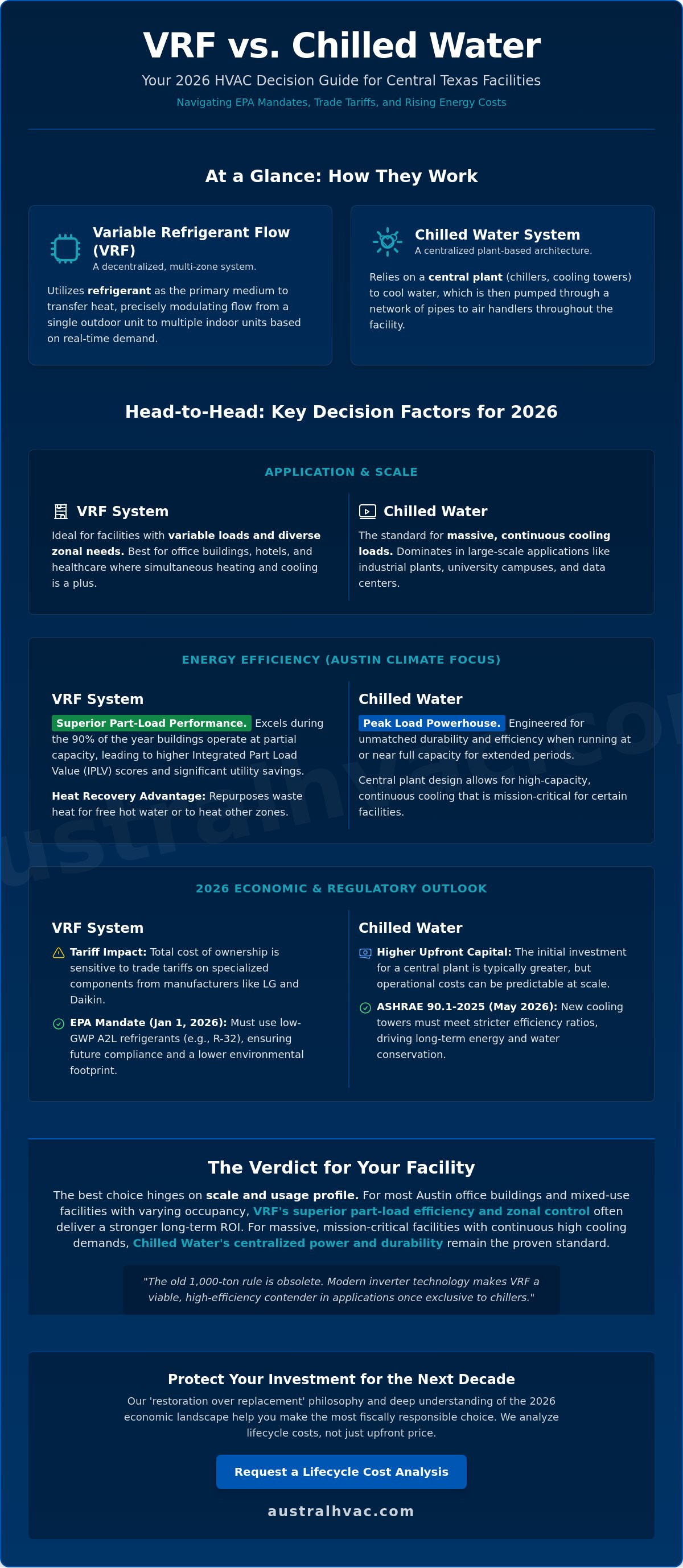
Understanding the fundamental architecture of a VRF vs chilled water system is the first step toward long-term operational efficiency and fiscal responsibility. While both technologies provide exceptional climate control, they use different mediums to transfer heat throughout your facility. A Variable Refrigerant Flow (VRF) system utilizes refrigerant as the primary cooling and heating medium, whereas a chilled water system relies on a centralized plant to distribute cooled water through a network of pipes. VRF is a sophisticated multi-zone solution that modulates power based on specific demand, ensuring you only pay for the cooling you actually use. Historically, engineers applied a 1,000-ton rule of thumb to decide between these technologies, but modern inverter technology has pushed VRF into larger applications that were once the exclusive territory of chillers.
How VRF Systems Maximize Zonal Control
VRF systems excel at providing precise comfort because they adjust the flow of refrigerant to multiple indoor units simultaneously. By integrating high-performance equipment like the Daikin Fit, you gain the benefit of an inverter-driven compressor that eliminates the energy spikes of traditional on-off cycles. In 3-pipe configurations, these systems achieve heat recovery, which allows one room to cool while another heats by repurposing waste energy. As of January 1, 2026, new VRF installations have transitioned to low-GWP A2L refrigerants like R-454B and R-32, helping your facility stay compliant with the latest EPA mandates while reducing your environmental footprint.
The Architecture of a Chilled Water Loop
A chilled water system takes a different approach entirely. A central chiller plant cools water, typically down to around 44-45°F, which is then circulated through a network of insulated pipes to air handling units or fan coil units throughout the building. Each terminal unit uses the chilled water to cool the air before distributing it to the occupied space. Unlike VRF, where refrigerant travels directly to each zone, chilled water systems keep refrigerant contained within the central plant — only water circulates through the building. This centralization simplifies maintenance access, since most critical components live in one mechanical room, but it requires a much larger physical footprint: cooling towers, pumps, and a chiller yard, plus the insulated piping network itself.
Performance and Efficiency: Which System Wins in Austin?
Austin's climate demands a system that doesn't just work at peak capacity but excels during the 90% of the year when your building operates at part-load. When you're comparing a VRF vs chilled water system, the deciding factor often comes down to how your facility handles fluctuating occupancy. VRF systems thrive in this environment because they modulate refrigerant flow to match exact needs. This often results in higher Integrated Part Load Value (IPLV) scores compared to traditional chillers. In large commercial buildings, where HVAC systems can account for 40% to 50% of total energy use according to industry data, these marginal gains in efficiency translate into significant utility savings.
Heat recovery is another powerful tool for Central Texas facilities. By repurposing waste heat from cooling cycles to provide warmth in other zones or even supplement hot water needs, systems like the LG Multi V reduce the overall strain on your mechanical plant. This capability is especially useful in Austin's humid summers, where managing latent heat is just as critical as lowering the dry-bulb temperature. Achieving this level of balance requires a partner who understands the nuances of local weather patterns and high-performance machinery.
Zonal Flexibility vs. Centralized Power
Precision temperature control is where refrigerant-based systems often outshine water-based loops. Refrigerant reacts faster to thermostat changes, providing immediate comfort for individual tenants. While a chilled water system offers massive centralized power for high, continuous cooling loads, it sometimes lacks the granular control needed for modern, multi-tenant office spaces. If you're struggling with uneven cooling, our team can help you evaluate a Preventative Maintenance Agreement to ensure your current system is performing at its peak efficiency.
Footprint and Installation Complexity
VRF systems offer a distinct advantage for retrofits in older Austin buildings because they require significantly less structural reinforcement. You don't need the heavy concrete pads or reinforced roof joists required for massive chillers and cooling towers. The smaller refrigerant piping is much easier to route through existing plenums than large-diameter water pipes. This reduction in installation complexity helps mitigate the high capital expenditure typically associated with high-efficiency HVAC upgrades while protecting the integrity of your building's structure.
Economic Outlook 2026: Capital Costs, Tariffs, and ROI
Financial planning for a commercial facility requires a hard look at both immediate checks and decade-long balance sheets. When you're evaluating a VRF vs chilled water system, the initial capital expenditure is often the primary hurdle for Austin facility owners. VRF systems offer a lower entry cost for medium-sized buildings because their modular nature allows you to scale the installation in phases. In contrast, chilled water systems require a substantial upfront investment for the central plant, cooling towers, and heavy piping infrastructure before the first ton of cooling is even delivered.
The national economic contingence has introduced new variables into this equation. In 2026, newly implemented trade tariffs on imported semiconductors and precision sensors have extended the ROI timeline for premium VRF systems, requiring a more strategic approach to long-term capital planning. These tariffs specifically impact the specialized components found in high-performance brands like LG and Daikin. To mitigate these rising costs, we help our clients maximize the Rebates Austin Energy program, which provides significant financial incentives for high-efficiency commercial upgrades that reduce peak demand on the local grid.
Calculating Total Cost of Ownership (TCO)
Don't just look at the purchase price; the real story is in the ten-year operational savings. Since HVAC systems account for 40% to 50% of total energy use in large buildings, even small efficiency gains are vital. While chilled water systems have a higher entry cost, their long-term durability in massive applications can be superior. However, the labor costs for installing complex hydronic loops are often higher than those for refrigerant piping. You must weigh these labor-intensive installation requirements against the projected 30% energy savings offered by the latest high-efficiency models.
Economic Resilience and Market Trends
Market conditions in 2026 continue to reward facilities that plan for flexibility rather than betting on a single technology. Supply chain disruptions and shifting tariff schedules have made lead times for both VRF outdoor units and chiller plant components less predictable than in past years, which is pushing more facility owners toward phased installations and stronger preventative maintenance programs to extend the life of equipment already in the ground. Facilities that pair either system with a documented maintenance history are also better positioned when it comes time to sell or refinance, since buyers increasingly ask for that paper trail before closing.
Maintenance Strategies and Long-Term Reliability
Maintaining a VRF vs chilled water system requires two distinct skill sets, yet the underlying philosophy remains the same: restoration over replacement. We believe that a disciplined maintenance plan is always more fiscally responsible than a premature system overhaul. For VRF systems, this means managing complex oil return cycles and monitoring refrigerant levels with absolute precision. As of January 1, 2026, the EPA requires leak detection and reporting for any system containing 15 pounds or more of high-GWP refrigerant. This is a significant shift from the old 50-pound threshold, making the role of a VRF repair specialist essential for staying compliant and avoiding heavy regulatory fines.
Preventative Maintenance Agreements
Most VRF failures stem from minor sensor or communication errors that eventually lead to major mechanical shutdowns. Our Preventative Maintenance Agreements act as an early warning system for your facility. By utilizing specialized LG Multi V repair expertise, we can calibrate these delicate electronics before they cause a total system failure. This proactive approach protects your peace of mind and ensures your high-performance equipment continues to deliver the efficiency you paid for.
System Lifespan and End-of-Life Planning
Well-maintained VRF systems typically run 15 to 20 years before major components need replacement, while chilled water plants — particularly the chiller itself — can often be rebuilt or have core components replaced to stretch service life well past 20 years, since much of the outdoor infrastructure like piping and cooling towers has a longer usable life than compressors and coils. Planning for end-of-life starts years in advance: tracking refrigerant availability, watching for rising repair frequency on a specific unit, and budgeting for replacement before a failure forces an emergency decision during peak season.
Future-Proofing Your Facility’s Comfort and Capital
Deciding between a VRF vs chilled water system in 2026 is a multi-layered financial and technical challenge. You've seen how trade tariffs on imported parts and new EPA refrigerant mandates have shifted the ROI timeline for modern facilities. Whether you choose the modular flexibility of a VRF or the heavy-duty power of a chilled water loop, your long-term success depends on a partner who prioritizes restoration over replacement. It's about protecting your bottom line while ensuring occupant comfort remains consistent through every Central Texas heatwave.
At Austral HVAC Refrigeration Services, we've served the Austin community since 2024 with a commitment to integrity and technical excellence. As authorized Daikin and LG VRF specialists, we don't just install equipment; we safeguard your investment through precise maintenance and ethical service that bridges the gap between high-level mechanical work and personal care. Don't let rising energy costs or complex regulations overwhelm your operations. We're here to help you navigate these choices with confidence and neighborly warmth.
Schedule a Commercial HVAC Consultation with Austral HVAC Refrigeration Services today to ensure your facility remains a high-performance environment for years to come. We look forward to helping you build a more efficient and reliable future.
Frequently Asked Questions
Is VRF more efficient than a chilled water system for a medium-sized office?
VRF systems often provide superior efficiency for medium-sized offices because they excel at managing variable occupancy across different zones. Unlike a centralized plant that may run at higher capacity than necessary, VRF technology modulates power to each individual indoor unit. This precision reduces wasted energy in unoccupied conference rooms or corner offices. When weighing a VRF vs chilled water system, owners find that the ability to heat and cool simultaneously offers a better balance of comfort and resource conservation.
How much more does a chilled water system cost to install compared to VRF?
Chilled water systems typically involve a larger initial capital outlay because they require a central plant, cooling towers, and extensive hydronic piping. While VRF systems are modular and can be installed in phases, the infrastructure for a chiller loop must be established upfront. National trade policies have increased the cost of imported sensors and semiconductors, but the heavy structural requirements for water-based systems still lead to a higher entry price for most Central Texas facilities.
What are the common maintenance issues with LG Multi V VRF systems?
Maintaining an LG Multi V system requires a deep understanding of sophisticated electronics and refrigerant flow dynamics. Common issues often involve communication errors between indoor and outdoor units or challenges with oil return in long piping runs. Our approach focuses on restoration over replacement, using specialized diagnostic tools to calibrate these systems. Regular checkups through a maintenance agreement prevent these minor technical glitches from escalating into expensive mechanical failures that disrupt your business.
Can I use Austin Energy rebates for both VRF and chilled water installations?
You can leverage the Rebates Austin Energy program for both technologies as long as the equipment meets specific high-efficiency benchmarks. This local incentive is designed to reduce the overall strain on the city's power grid during peak summer months. Whether you're installing a Daikin Fit system or a large-scale chiller, these rebates help offset the initial investment. We assist clients in navigating the application process to ensure they receive the maximum financial benefit for their efficiency upgrades.
What happens if a VRF system has a refrigerant leak in a high-rise building?
A refrigerant leak in a high-rise building requires immediate attention from a specialist to ensure occupant safety and environmental compliance. New federal mandates have tightened reporting requirements, making rapid leak detection more critical than ever. We prioritize the integrity of your system by identifying the source quickly and performing a precise repair. This protects your facility from the rising costs of replacement refrigerant and prevents the stress associated with potential regulatory penalties or system downtime.


Comments